With demand for after-school programs far exceeding supply, program directors must compete for federal funds—and keeping their program doors open depends on funding approval. This guide provides an overview of the different sources of federal grants, including 21CCLC and other helpful topics.
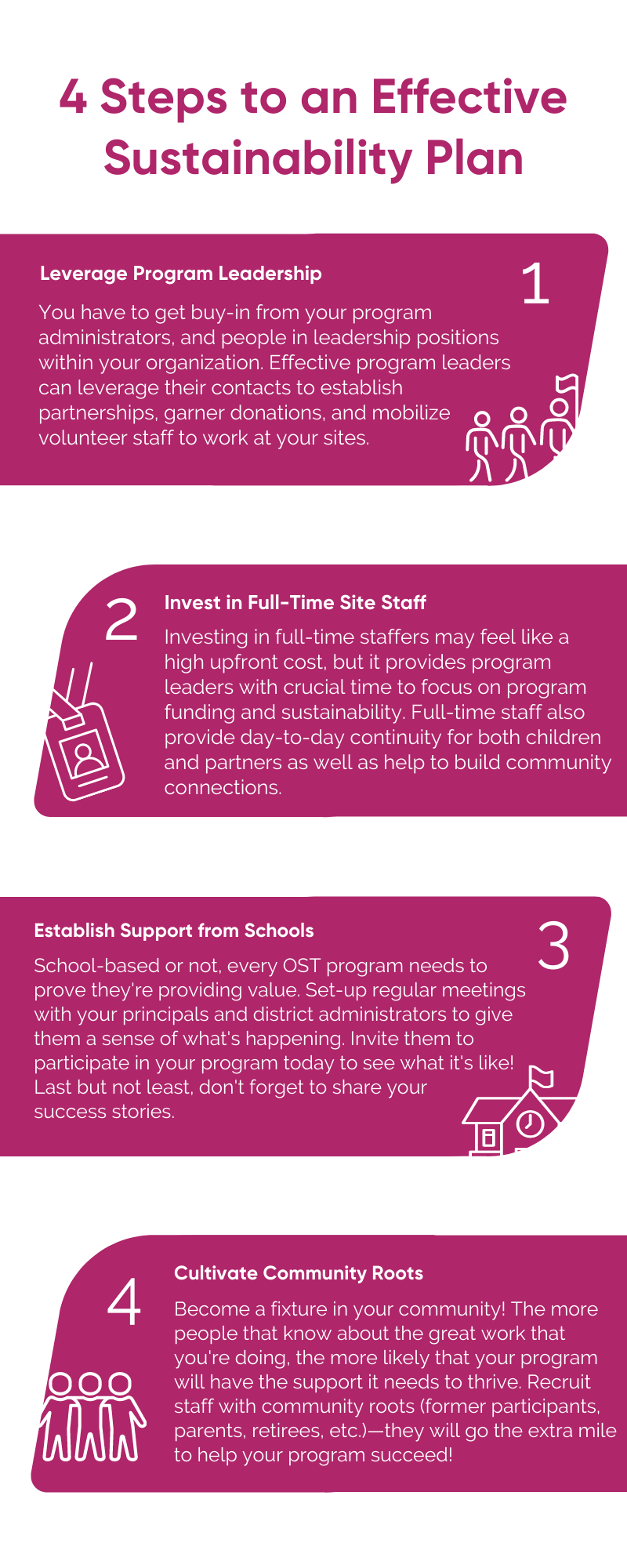
To ensure long-term sustainability, OST programs need to take a more proactive, structured approach. That's why we created this white paper, focused on the T.I.N.C.A.N. approach.
We know Out-of-School-Time (OST) programs work. A two-year study of 3,000 low-income elementary and middle school children found that consistent involvement in high-quality afterschool programs is associated with notable improvements…
Student data collection requirements are mandatory to fulfill when securing funds for grant-based programs. For those that are unaware, grant coordinators collect data to maintain the federal funds when their…
After-school programs must track programmatic data if they want to access federal funding sources, such as the Nita M. Lowey 21st Century Community Learning Centers (21st CCLC) initiative. Programmatic data…
AfterSchool21 (AS21) helps out-of-school-time (OST) programs collect their data and generate calculations needed to comply with new government reporting mandates that started July 1, 2021. Also in the release is new financial reporting capabilities for programs that charge fees. Each 21st Century Community…
After-school and out-of-school-time (OST) programs offer more than just childcare. Research consistently finds that they promote social skills, bolster students’ connection to school, increase school attendance, improve grades and academic…
TransACT Communications, LLC, a leading SaaS provider of engagement, compliance and payment solutions for the education market, has received a strategic growth investment from the Polaris Growth Fund.

 eBook
eBook
 White Paper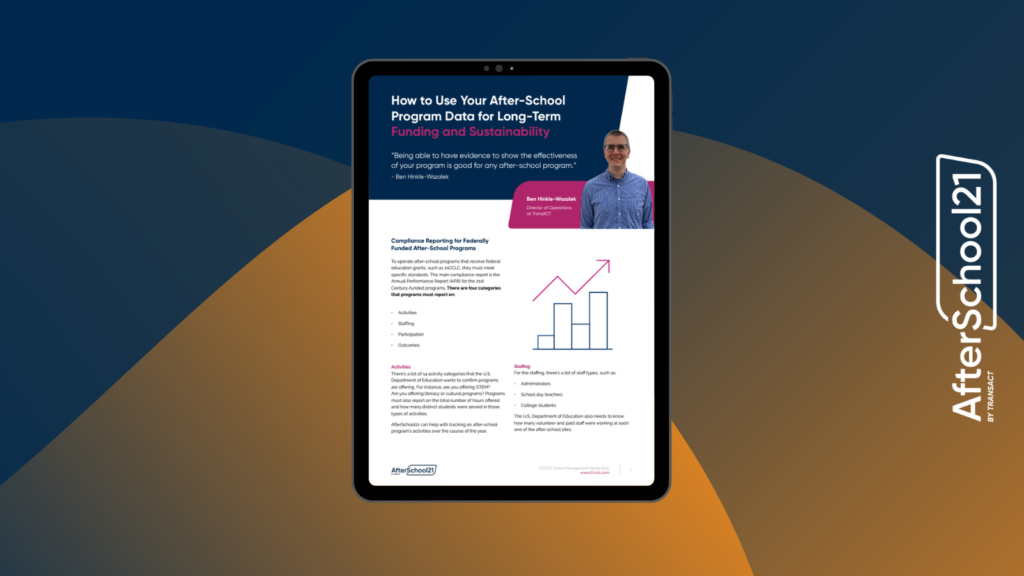

 Post
Post