
After-school programs must track programmatic data if they want to access federal funding sources, such as the Nita M. Lowey 21st Century Community Learning Centers (21st CCLC) initiative.
Programmatic data helps evaluators and administrators gain a better understanding of essential metrics like:
- Student participation
- Attendance rates
- Types of enrichment activities offered
- Family engagement opportunities
In the webinar, “Using Data For Program Evaluation and Maintaining Funding”, Limelight Analytics and TransACT specialists discuss how programmatic data can ensure long-term funding for after-school programs as well as four key topics:
- Why programs should collect performance data. Program evaluation may be a requirement for the funding a program is receiving. But even if it’s not, there are basic data every program should collect.
- Developing an effective strategy. Defining what data an after-school program should collect and the scope is the most valuable asset to telling a program’s story.
- How technology can ease the data-tracking burden. Discover how collecting data works in the AfterSchool21 system and how to track attendance.
- Using data to measure program success. Tips and best practices on how to utilize the information collected in the AS21 system so after-school programs can share all the positive things their program does with the community, program stakeholders, and funders.
Before diving into insights from the specialists, it’s important to understand why after-school programs should collect data and how it relates to federal funding sources.
The Importance of After-School Program Data Collection
After-school programs provide youth with supervision, safety, and quality services through academic and enrichment activities. These programs are vital to school-aged youth who regularly attend these supervised programs that cover a wide range of focus areas, including:
- Mentoring
- Sports and recreation
- Academic assistance
- Workforce development
- Youth experiencing homelessness
- Apprenticeships and more
“About 7.7 million US children head to after-school programs when the school day ends.”
Many families depend on after-school programs to supervise their children once the school day ends. They also serve as a safe space for homeless youth who may rely upon these programs for clothing, nutrition services, transportation services, and more.
Despite the importance of these after-school programs, securing federal grants requires extensive data collection and reporting from applicants. One of the most critical yet challenging metrics to track is program participation since it must be recorded daily.
Fortunately, data collection systems such as AfterSchool21 (AS21) are built to capture and visualize all the data to run an after-school program. Moreover, the AS21 system is vital in providing evaluators with the programmatic data needed to evaluate after-school programs. And since program evaluation is essential to sustainability, TransACT partnered with Danielle Sovinski, Evaluation Specialist with Limelight Analytics.
Below, Sovinski utilizes her 11 years of experience working for after-school programs and helping clients develop data collection protocols to provide expert advice on program evaluation benefits.
After-School Program Evaluation Benefits
Program evaluation aids in demonstrating a program’s effectiveness and strengths. It’s also important for identifying opportunities for improvement. According to Sovinski, after-school programs should collect basic information to aid evaluation efforts.
Federally funded programs must collect student-level data, which may include demographic information of participants and academic data (e.g., grades and assessment scores). Collecting these types of data can help programs begin to understand who is attending their program and identify how the program is affecting participants.
Additionally, after-school program data can aid in reporting outputs such as:
- The number of students who attend
- The number of days offered
- The types of activities offered
- Outcomes (e.g., academic achievements)
Program evaluation also helps administrators make data-driven decisions about what enrichment opportunities their program should offer to better serve their students.
How to Set Goals and Evaluate After-School Program Data
Asking specific questions helps define the scope of the data that programs want to evaluate. One of the first questions to consider is: “what are your program goals?”
Developing goals may sound overwhelming at first, but there are some helpful frameworks that can help programs identify and measure their goals, such as SMART goals.
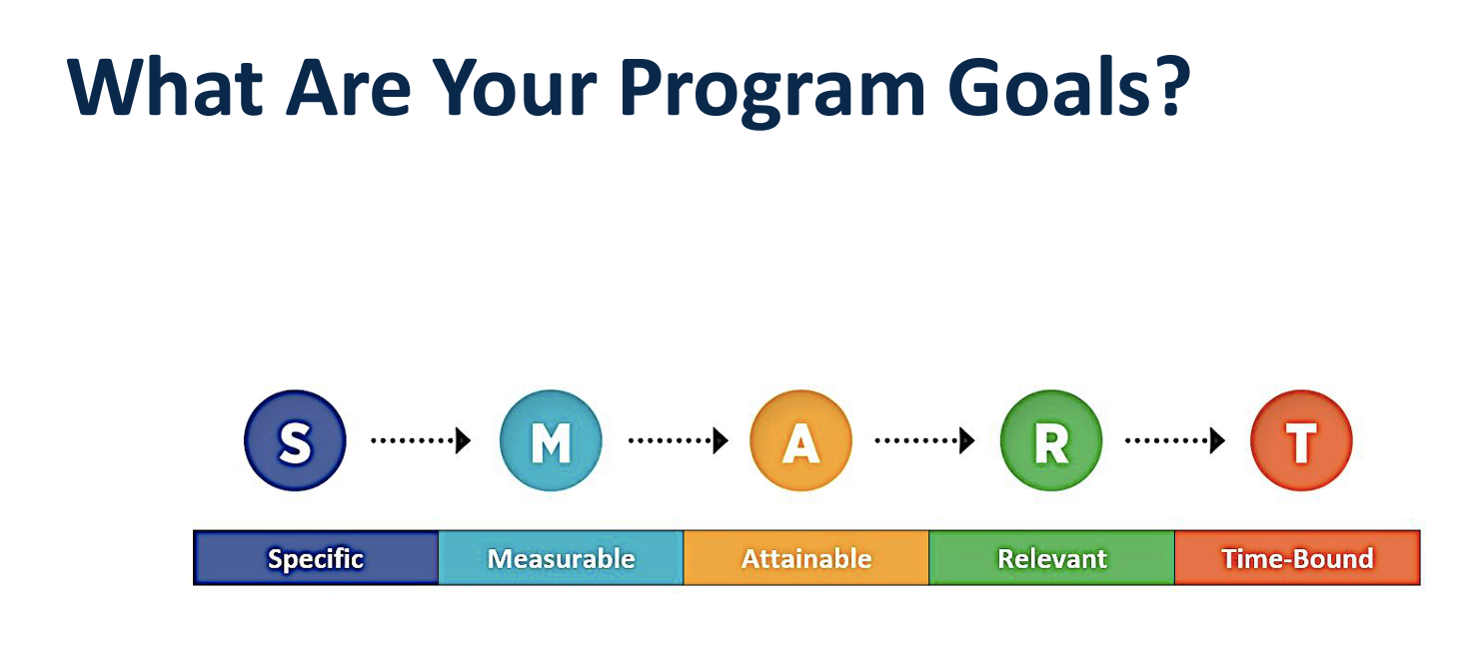
Source: Using Data For Program Evaluation and Maintaining Funding webinar
The SMART goals framework consists of five areas to aid in developing goals:
- Specific
- Measurable
- Attainable
- Relevant
- Time-bound
An after-school program can begin the evaluation process by utilizing the SMART goals framework. Once 1-2 goals are identified, they can share the impact of their program with their community and stakeholders.
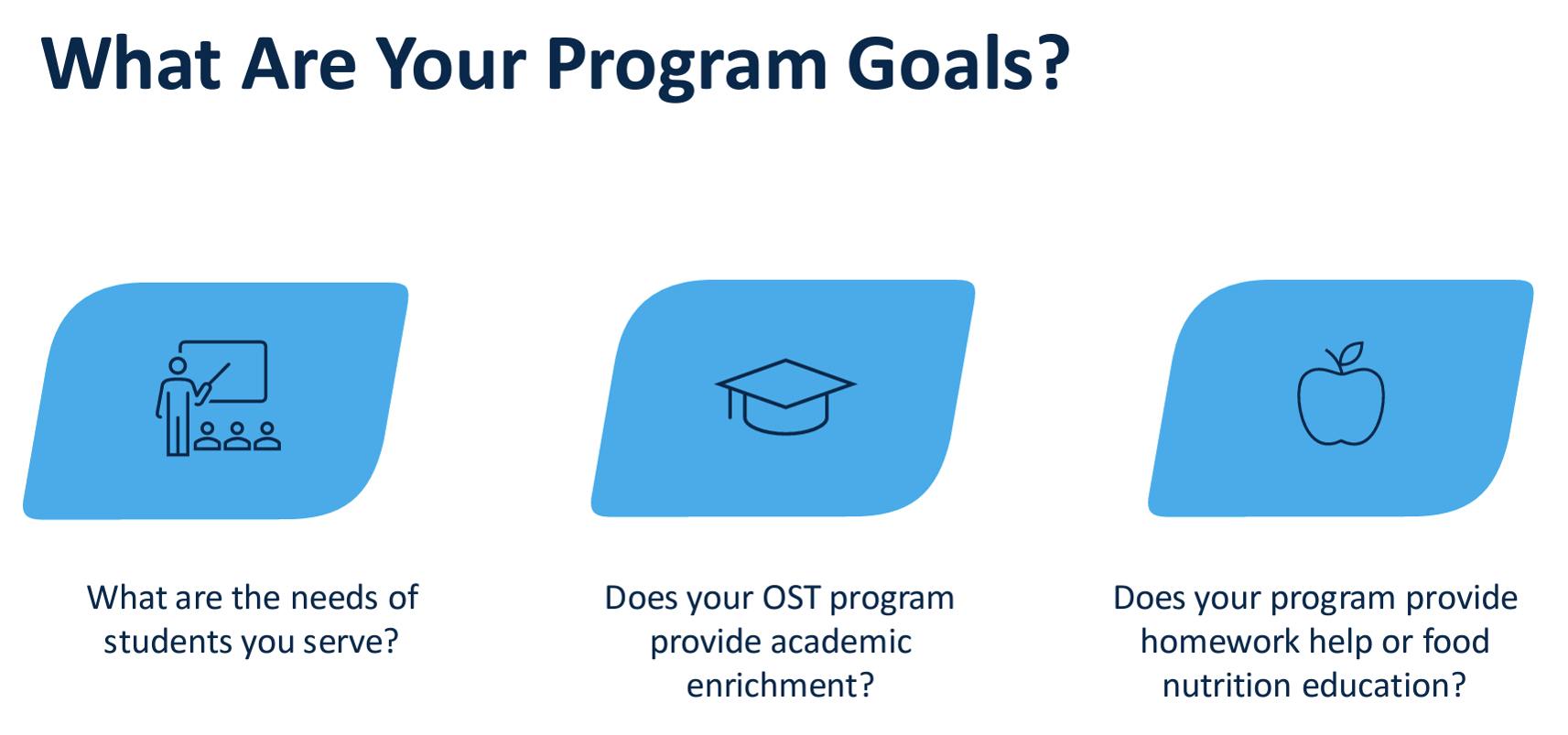
Source: Using Data For Program Evaluation and Maintaining Funding webinar
Program goals can also help administrators take inventory of the types of enrichment activities their program offers most often. For example, if a program offers homework assistance, administrators may consider developing a goal around improving students’ grades or assessments. If a program is more nutrition or physical activity-focused, administrators may consider developing a goal that includes improving healthy eating habits or increasing physical activity.
“Once you’ve decided on some goals that you’d like to achieve, you may think about how you will collect and maintain data needed to report on your goals.”
To help after-school programs track their goals, AS21 was designed to help administrators easily manage data across their entire program. With the data collected in the AS21 system, after-school programs can track their progress and report on their goals throughout the year.
Develop an Effective Evaluation Strategy with AfterSchool21
AfterSchool21 is a web-based software that increases the effectiveness of an after-school program and 21APR data collection. The software system was built to capture and visualize all the data to run an after-school program.
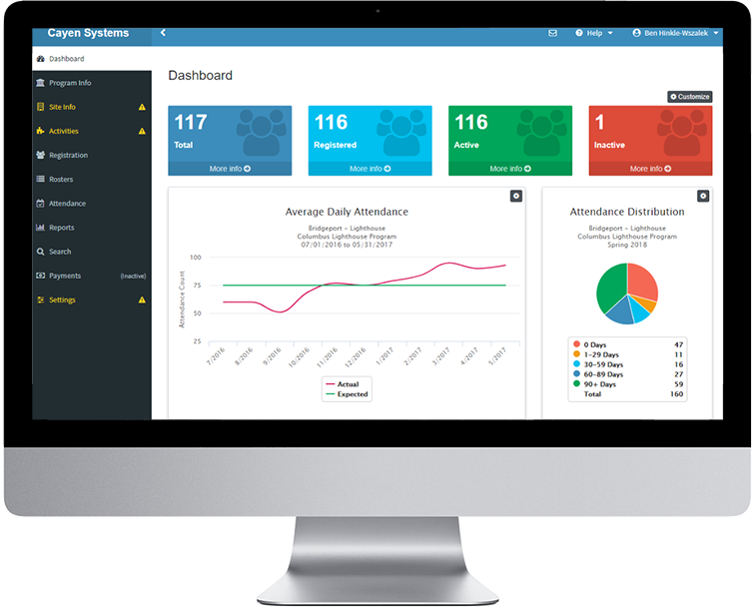
Photo Caption: AS21 dashboards can be run at a site level or across an entire program.
The dashboard provides key information to give users a good understanding of who’s being served and how often. Moreover, the charts produced in AS21 can be used for many purposes, including internal and external.
Multiple challenges can arise when providing after-school program evaluators with all the data they need to satisfy evaluation requirements. With AfterSchool21, evaluators can log into the system and only access aggregate data for evaluation purposes.
AS21 user