
Why Transportation Real-Time Intelligence Is Transforming K-12 School Districts
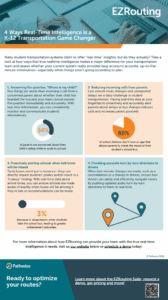 Every morning, millions of parents ask the same question: “Did my child make it to school safely?” Surprisingly, 34% of parents report feeling concerned about their child’s safety during the commute. That’s where transportation real-time intelligence steps in to bridge the gap.
The Problem With Outdated Systems
Most school districts still rely on delayed or incomplete data to manage their bus fleets. As a result, transportation teams are left scrambling when parents call asking about a late bus. Even worse, 80% of districts don’t offer an app that lets parents check their child’s bus status on their own. This lack of visibility creates frustration for families and overwhelming call volumes for staff.
How Real-Time Data Makes a Difference
Transportation real-time intelligence changes the game in several key ways. First, it gives your team instant answers when a parent calls about a student’s location. No more guessing or putting someone on hold.
Second, it allows you to send proactive alerts. Instead of waiting for complaints, you can notify parents about delays or route changes before they even pick up the phone. This builds trust and dramatically cuts down on inbound calls.
Additionally, real-time arrival data helps schools prepare when buses are running behind. Tardy arrivals can affect grades and even trigger truancy findings. With advance notice, administrators can make accommodations.
Finally, when last-minute route changes happen, real-time systems push updated turn-by-turn directions straight to drivers. This keeps students safe and routes running smoothly.
The Bottom Line
Districts that invest in transportation real-time intelligence see measurable results, including a 3% decrease in absenteeism. That translates directly into better student outcomes.
Want to see all four benefits at a glance? Download our free infographic to learn how real-time intelligence can transform your transportation operations today.